Traditional Leadership

Current governance structure and leadership hierarchy of the Mulamula Traditional Authority

Current Leadership Structure

The Mulamula Traditional Authority operates under a structured governance system combining traditional customs with modern administrative requirements

Elephant icon

Hosi Desmond Maluleke

Acting Senior Traditional Leader

Current Leader (2021 - Present)

Currently serving as Acting Senior Traditional Leader, recognized by COGHSTA (Cooperative Governance, Human Settlements and Traditional Affairs). Leading the traditional authority through modern challenges while preserving cultural heritage and traditional governance practices.

150+
Years
Continuous Leadership
4
Villages
Under Authority
9
Council
Members
6
Generations
Succession Line
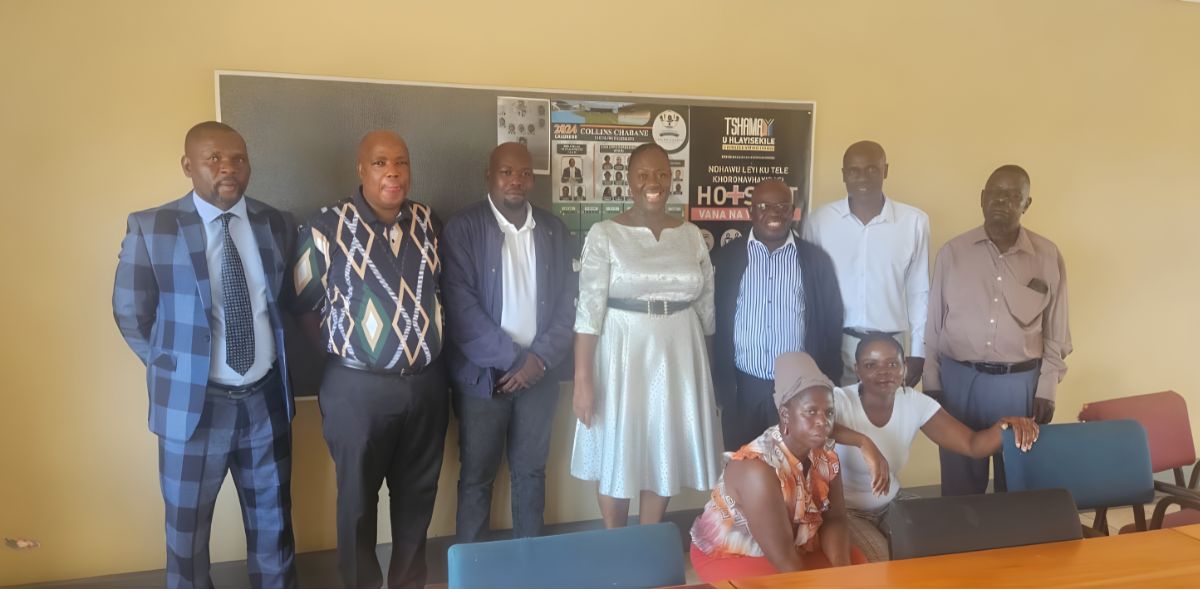
Mulamula Traditional Council

The Mulamula Council provides governance, administrative support, and traditional oversight for the community.

Mulamula Royal Council Members

Mulamula Council Members - Official Group Photo

The Mulamula Council in official session – Leading with traditional wisdom and governance.

Core Council Members

Chairperson

Mr. Maluleke Abel

Leads council meetings and oversees governance decisions.

Deputy Chairperson

Maluleke Audience Simon

Assists chairperson and acts in their absence.

Secretary

Mr Maluleke Khazamula Robert

Maintains records and handles correspondence.

Deputy Secretary

Mr Maluleke M Elias

Supports secretarial functions and documentation.

Treasury

Mr Maluleke Mdunwazi Eric

Manages financial affairs and budgeting.

Mulamula Traditional Council

Royal Council

Donald Mafemani Vukeya

Abel Maluleke

Dayson Dumela

Samuel Mafemani Maluleke

Mkateko Raymond Maluleke

Tribal Council

Chairperson

Hosi Desmond Maluleke

Hosana Terrence Nhombelani

Hosana Mafemani Cedric Maluleke

Hosana Manuel Vukeya

Hosana Master Chabalala

Hosana Richard Mbhazima Chauke

Hosana Richard Mzamani Maluleke

Hosana Hlekani Enny Vukeya

Hosana Skheto Kanneth Maluleke

Hosana Reviet Maluleke

Hosana Khazamula Robert Maluleke

Hosana Waar Maluleke

Hosana Thomas Mzamani Maluleke

Tribal Council Secretary

Lemukani Mission Maluleke

Tribal Office Clerk

Betty Tsakani Maluleke

Tribal Office Treasurer

Dorcus Nkhesani Ndhambi

Community Representatives

Freddy Mabasa Bolosho

Julia Makhubele

Royal Succession Line

The traditional succession follows male primogeniture from the founder Chavane "Mulamula" Maluleke through his first-born son's lineage

Walter

Current Heir to the Throne

6th Generation

First-born son of George

The rightful heir according to traditional succession laws, representing the sixth generation in the direct male primogeniture line from the founder.

Status: Alive | Lineage: Great-great-grandson of Chief Photani Jim Mkhacani Maluleke

George Mkhacani Maluleke

Father of Current Heir

Born 1962

5th Generation

Son of Samuel Maluleke, continuing the succession line established by his ancestors.

Samuel Maluleke

4th Generation

1933 - 1968

Son of Gezani Johannes

Continued the succession line during the mid-20th century, father of George Mkhacani Maluleke.

Gezani Johannes Maluleke

3rd Generation

Born 1907

Son of Chief Photani

Son of the renowned Chief Photani Jim Mkhacani Maluleke, maintaining the royal bloodline.

Photani Jim Mkhacani Maluleke

Traditional Chief

1874 - 1947

Chief: 1928-1929, 1933-1947

The most celebrated chief in Mulamula history, serving 15 years total and establishing strong traditional governance foundations.

Mbayimbayi Maluleke

Succession Line Founder

1856 - 1918

First-born of Principal Wife

First-born son of Chavane "Mulamula" Maluleke by his principal wife Nwa-Khwenu, establishing the succession line that continues today.

Governance Framework

Our traditional authority operates within South African legal frameworks while maintaining cultural authenticity

Traditional Functions

  • 1

    Cultural Preservation

    Maintaining traditional customs, ceremonies, and cultural practices

  • 2

    Dispute Resolution

    Traditional court proceedings and community conflict mediation

  • 3

    Land Administration

    Overseeing traditional land use and allocation within customary law

  • 4

    Community Leadership

    Providing guidance and leadership to the four villages under our authority

Administrative Functions

  • 1

    Government Liaison

    Interface with COGHSTA and other government departments

  • 2

    Development Planning

    Community development initiatives and infrastructure planning

  • 3

    Financial Management

    Budget oversight and resource allocation for community projects

  • 4

    Record Keeping

    Maintaining official documentation and genealogical records

Legal Framework – Traditional & Khoi-San Leadership

National Legislation:

  • Constitution of the Republic of South Africa, 1996 (Sections 211 & 212 (1)) – recognizes traditional leadership and customary law as integral parts of South Africa’s legal system, subject to the Constitution. It provides for the role of traditional leaders at local level and directs courts to apply customary law where applicable.
  • Traditional & Khoi-San Leadership Act 3 of 2019 – comprehensive code for recognition, functions, houses, councils & commissions.
  • Traditional Leadership & Governance Framework Act 41 of 2003 – framework for recognition & roles of traditional leaders, councils & houses (repealed by Act 3 of 2019).
  • National House of Traditional & Khoi-San Leaders Act 22 of 2009 – establishment & mandate of National House (now superseded by Act 3 of 2019).
  • Auditing Profession Act 26 of 2005 – audit obligations for kingship, principal & traditional councils.
  • Remuneration of Public Office Bearers Act 20 of 1998 – salaries & allowances for leaders.

Provincial & Ancillary Legislation:

  • Limpopo Traditional Leadership & Institutions Act 6 of 2005 – provincial recognition, support & dispute resolution.
  • Limpopo House of Traditional Leaders Act 5 of 2005 – composition, election & functions of provincial house.
  • Local Government: Municipal Structures Act 117 of 1998 – ward committees & IDP participation by councils.
  • Municipal Systems Act 32 of 2000 – service-delivery agreements between councils & municipalities.
  • Trust Property Control Act 57 of 1988 – governance of trust accounts held by councils.

All references are drawn directly from the Traditional & Khoi-San Leadership Act 3 of 2019 as published in Government Gazette 42865 of 28 November 2019.

Villages Under Our Authority

Four traditional villages fall under the jurisdiction of the Mulamula Traditional Authority

🏘️

Magangeni (Mbhayimbhayi)

Traditional village under Mulamula authority

🏘️

Maveke (Nhombelani)

Traditional village under Mulamula authority

🏘️

Bulwini (Dumela)

Traditional village under Mulamula authority

🏘️

Muswane (Muswani)

Traditional village under Mulamula authority